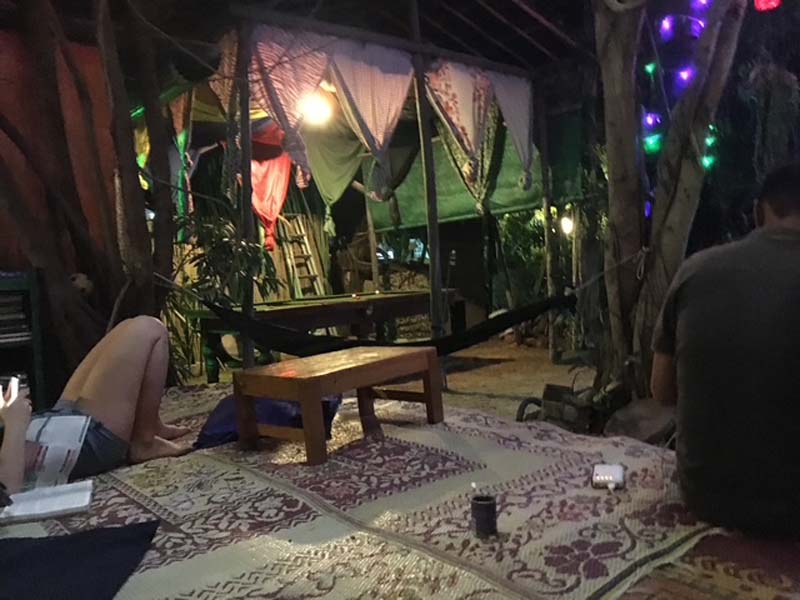
A hostel’s atmosphere is often not the same when you come back. It changes with the travellers passing through, the volunteers, the season and the collective energy of the moment. The place stays the same, but the group recreates it every time.
Guests help create the atmosphere
Guests can play an essential role as atmosphere-makers: they don’t just consume the place, they help produce it.
From hostel to coliving
The overlap between a hostel and a coworking space is obvious. So it’s no surprise that new concepts are emerging, such as coliving, which merges the two.
The shared food shelf
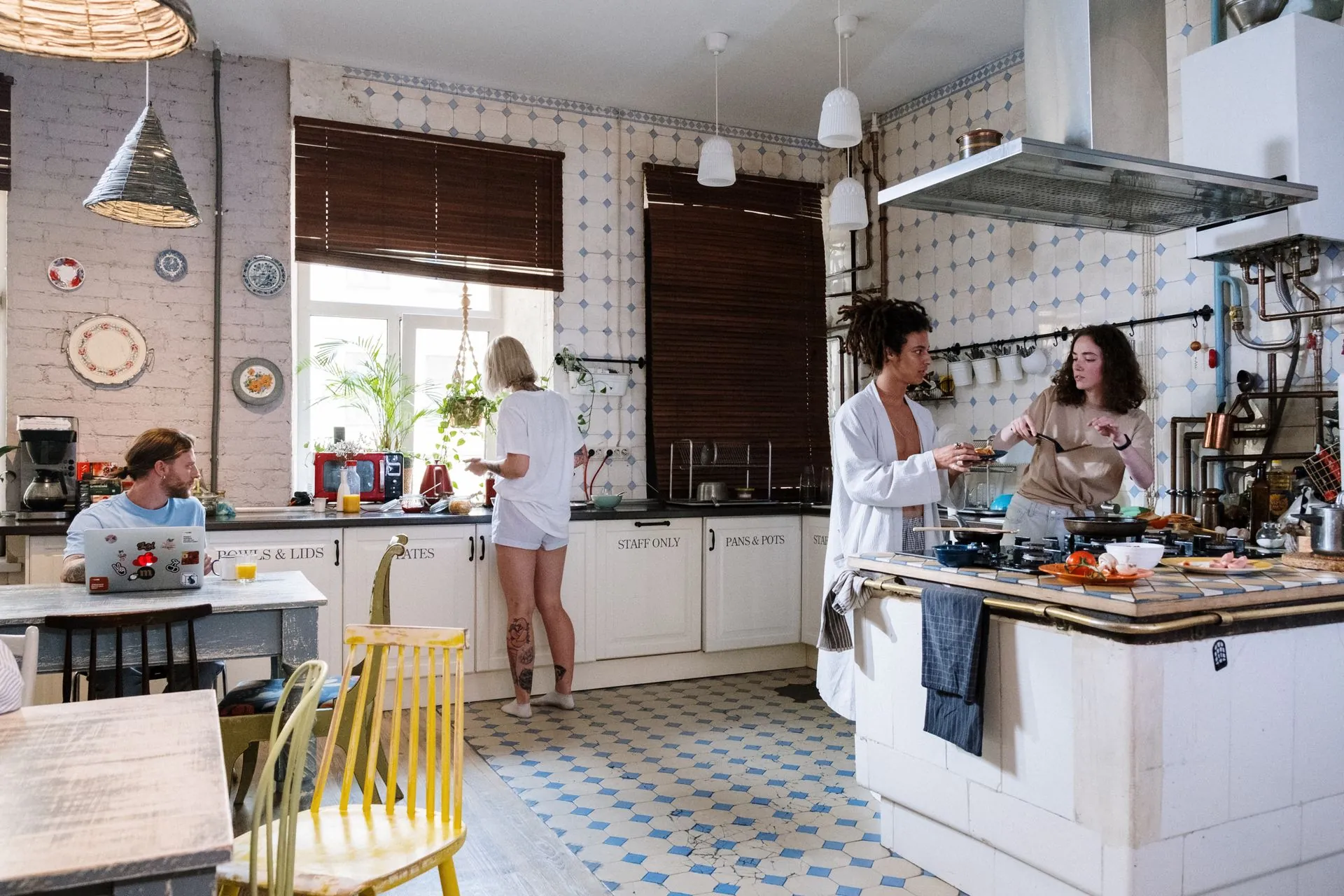
In a hostel, there is usually a community corner in the kitchen. Better-off guests leave food behind for those who don’t have much to eat.
That was me at the beginning, before I even understood that the place was partly built on sharing. I learned to savour those moments and to welcome pure moments of humility.
The pandemic exposed the fragility
The pandemic revealed the other side of this fragility. A hostel depends on movement, renewal and temporary presence; deprived of that movement, it almost stops being a hostel and becomes something else.
During the pandemic, guests were absent, or became flatmates. The atmosphere changed, and some hostels didn’t survive the endless quarantine.
Imagining a hostel born from a hundred experiences
Now that the pandemic is behind us, the desire emerges to imagine a hostel born from these hundred experiences: a place deliberately designed to welcome encounters, preserve the balance of the group and turn a short-lived flatshare into a lasting form of hospitality.